What is it worth?
The starting point of Other Words for Being is a deceptively simple question — what is it worth? — posed not about art, but about the objects that surround us. Vutha's canvases are populated by things: the possessions we accumulate, the monuments we build, the memorials we erect. What he points to is something we sense but rarely articulate: that human existence has always struggled to be contained within a single body. We leave traces everywhere — in the objects we own, in the spaces we inhabit, in the symbols we choose to carry.
It's not a critique so much as an excavation — he asks us to look honestly at what we reach for when we want to prove we were here.
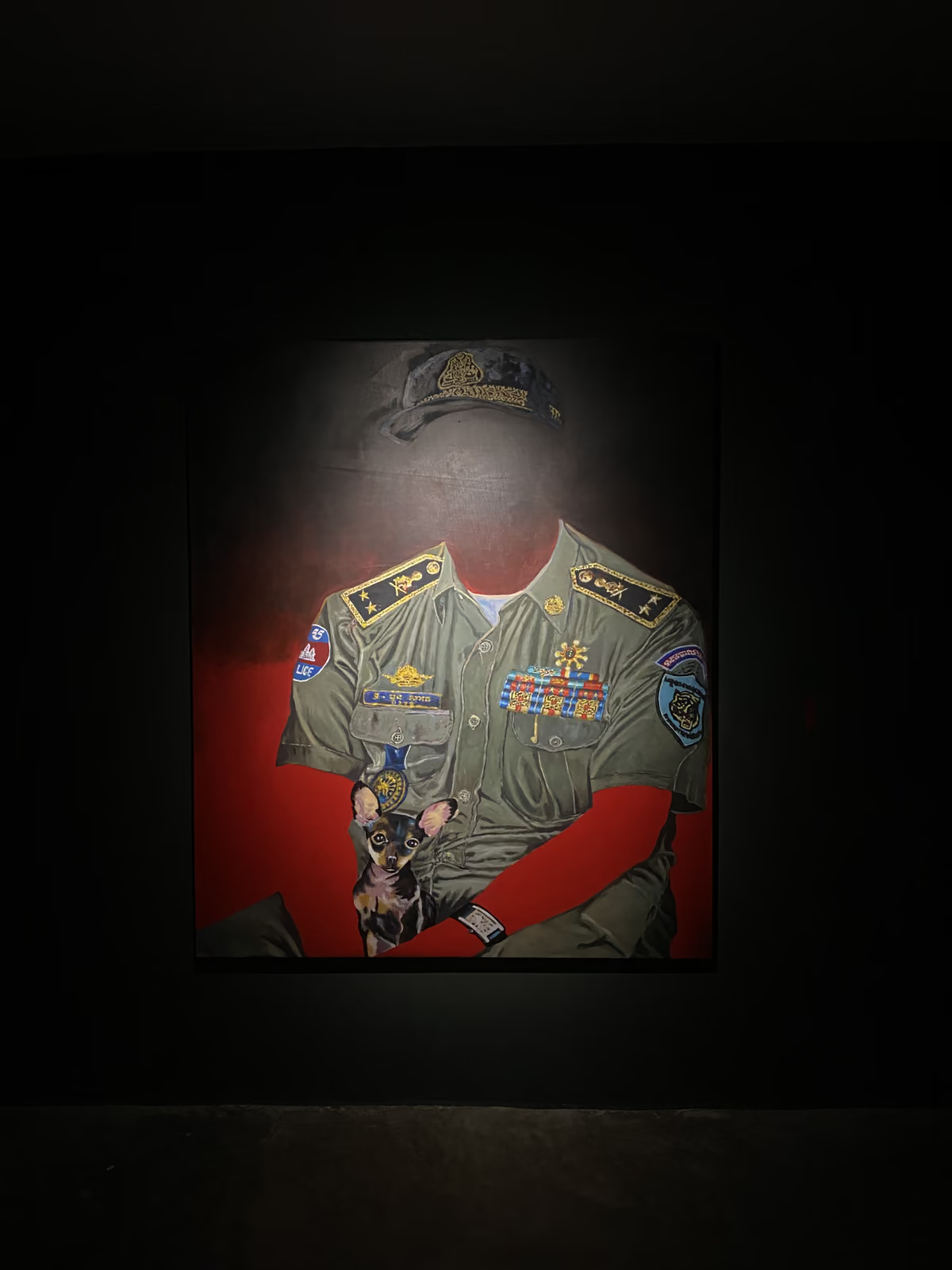
Uniform, status, and the afterlife of identity
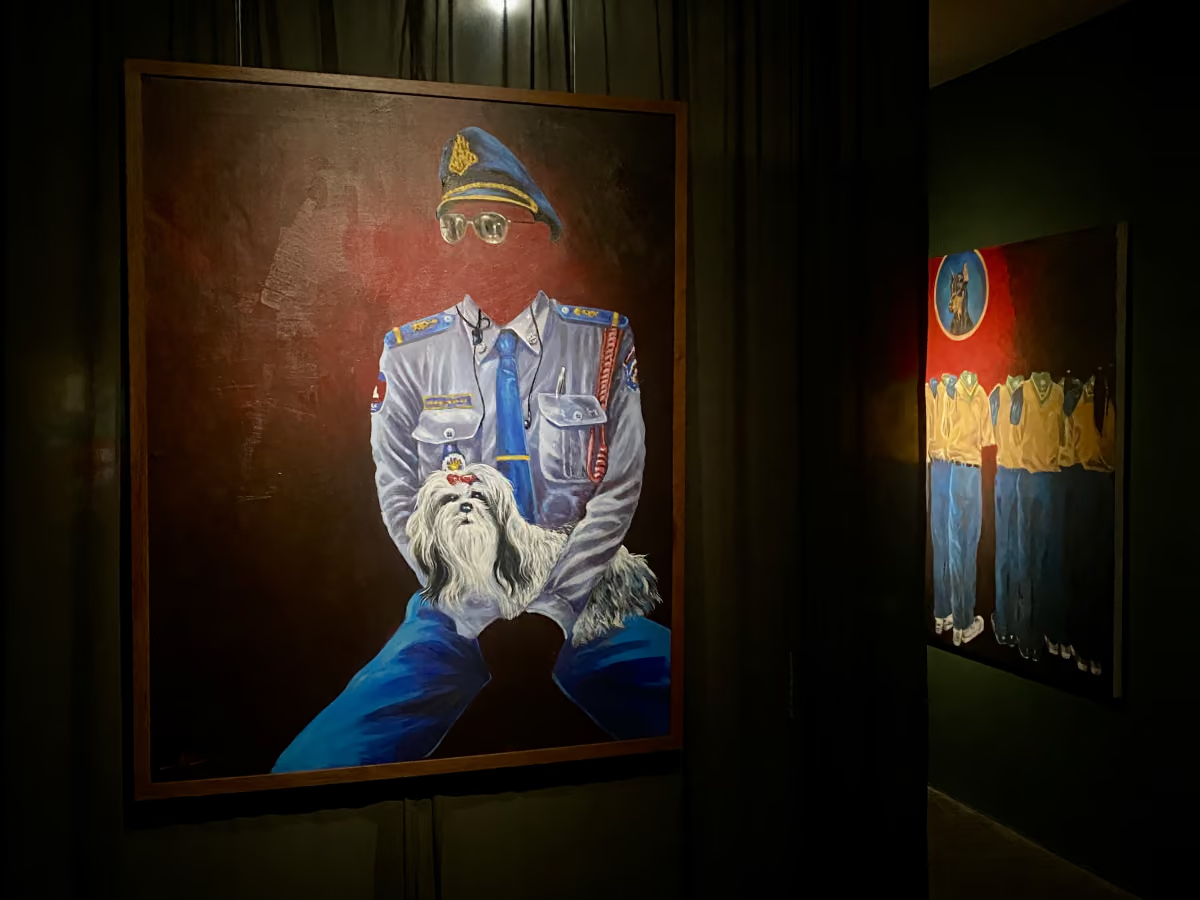
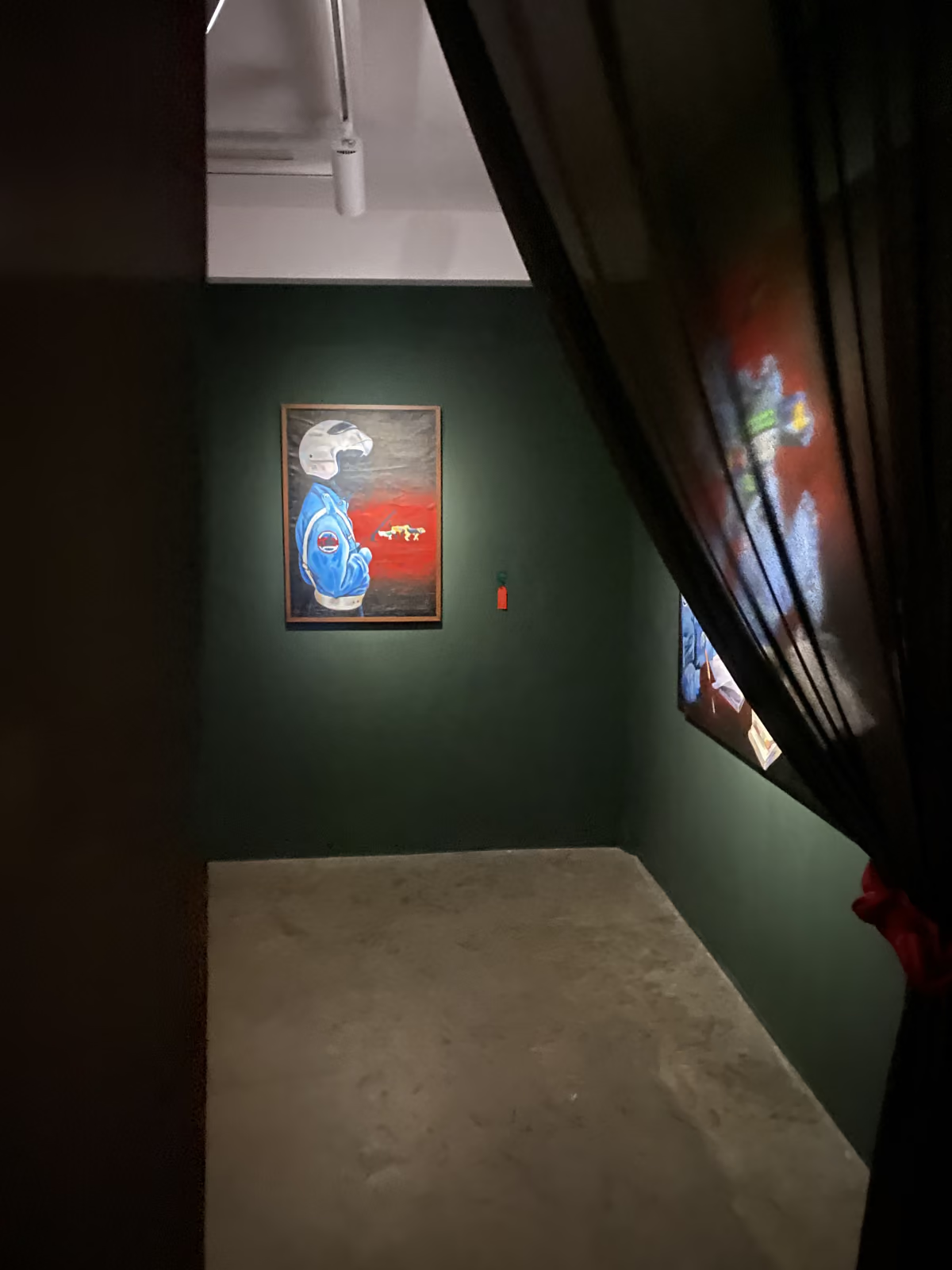
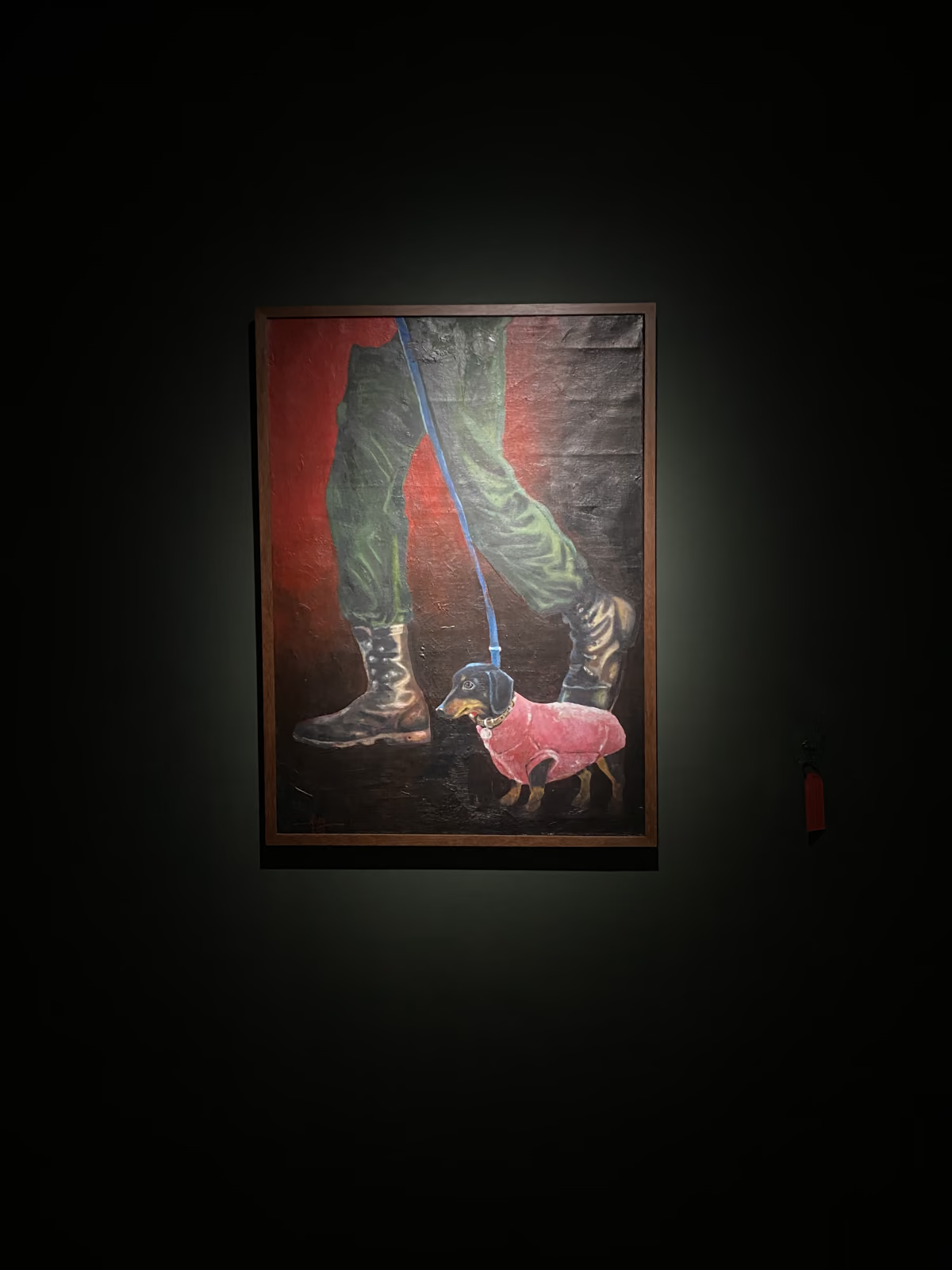
What gives these works their force is the framing: portrait-format compositions where the face is deliberately absent. What remains — uniforms, medals, insignia, jewels, pedigree animals — are the outward signs of privilege, stripped of the person who wears them.
Vutha isn't denouncing political power; what interests him is how efficiently a uniform communicates social position without a face. Clothing here is never chosen to cover the body — it signals rank, responsibility, authority. And in that choice, something haunting emerges: these faceless portraits in ceremonial dress mirror funeral rites, where costume and status testify to a life long after the body is gone. Other Words for Being is on view until December 31, 2026 — and the question it leaves you with doesn't let go easily.
To discover more cultural happenings in Phnom Penh, check out our Culture section and the events calendar.