"Spirit, Body, and Land" by Khvay Samnang at the Institut Français du Cambodge

Jun 28, 2026

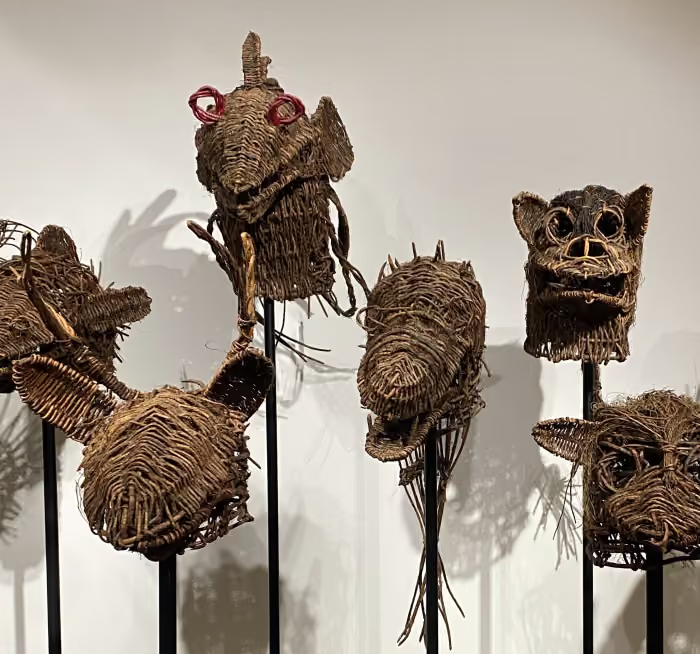
Woven wicker ritual masks made from natural materials by Cambodian artist Khvay Samnang
Discover Spirit, Body, and Land, Khvay Samnang's exhibition at the Institut Français du Cambodge
guide
What does it mean to belong to a land? Not to own it, not to exploit it — but to be of it, shaped by it, accountable to it? These are the questions at the heart of Spirit, Body, and Land, a landmark contemporary Cambodian art exhibition by artist Khvay Samnang, presented at the Institut Français du Cambodge in partnership with SNA Arts Management. A decade of works. A vision of the world forged in the field, in the mud, in listening.
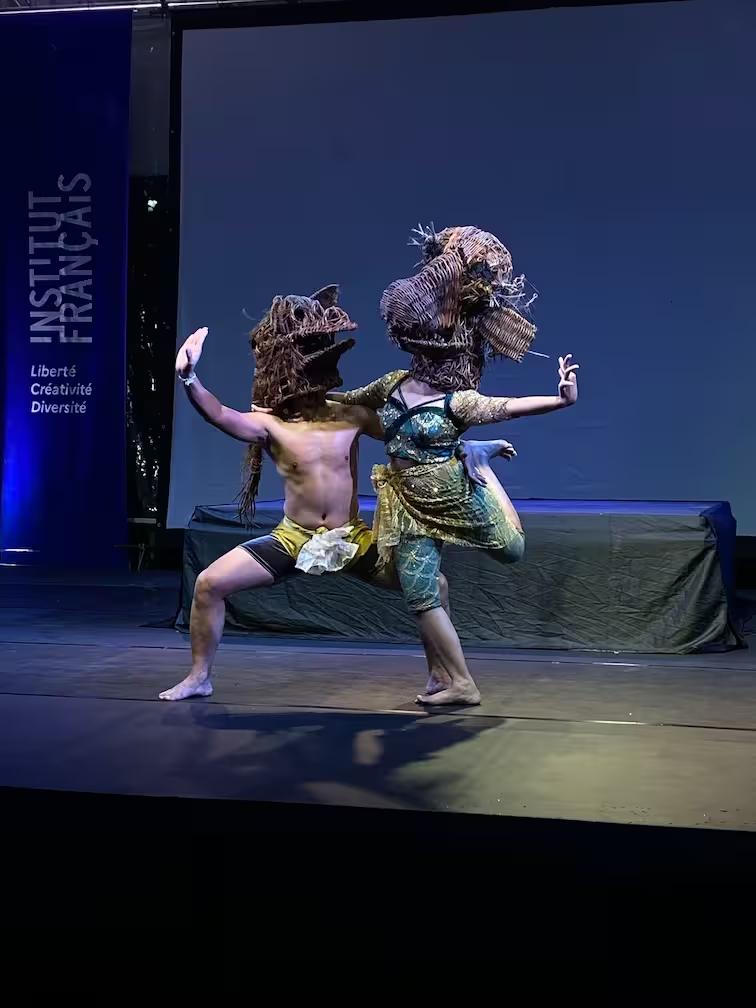
On stage, two classical Khmer dancers wearing masks made by the artist Khvay Samnang
A historic first: classical Khmer dance performance at the Institut Français du Cambodge, with performers wearing masks crafted by artist Khvay Samnang — a fusion of ancestral gesture and contemporary creation.

A Decade of Immersion

Born in 1982 in Svay Rieng and trained at the Royal University of Fine Arts in Phnom Penh, Khvay Samnang has spent over two decades building one of Southeast Asia's most powerful multidisciplinary practices — spanning performance, video, photography, sculpture, and installation. Spirit, Body, and Land brings together a selection of environmental art works created between 2016 and 2026, unfolding across the IFC's spaces as a unified meditation on ecological and spiritual rupture.

These ten years were not spent in a studio. They were spent listening. Samnang immersed himself in the lives and landscapes of Koh Kong province's indigenous communities. From these encounters emerged a body of work that is at once deeply personal and profoundly collective: masks woven from vines, hybrid sculptures combining natural and industrial materials, and video performances enacted within forests, rivers, and contested lands.
The Land as a Living Body

At the core of Samnang's practice is a conviction: colonization and unchecked development have not only seized territories — they have severed something far more fragile, the bond between people and the land that shaped them, between communities and the ancestral knowledge that sustained them for centuries. Rapid urbanization, political conflict, armed violence, and global economic pressures have accelerated this rupture, triggering environmental crises whose consequences are felt most deeply by those least responsible for them.
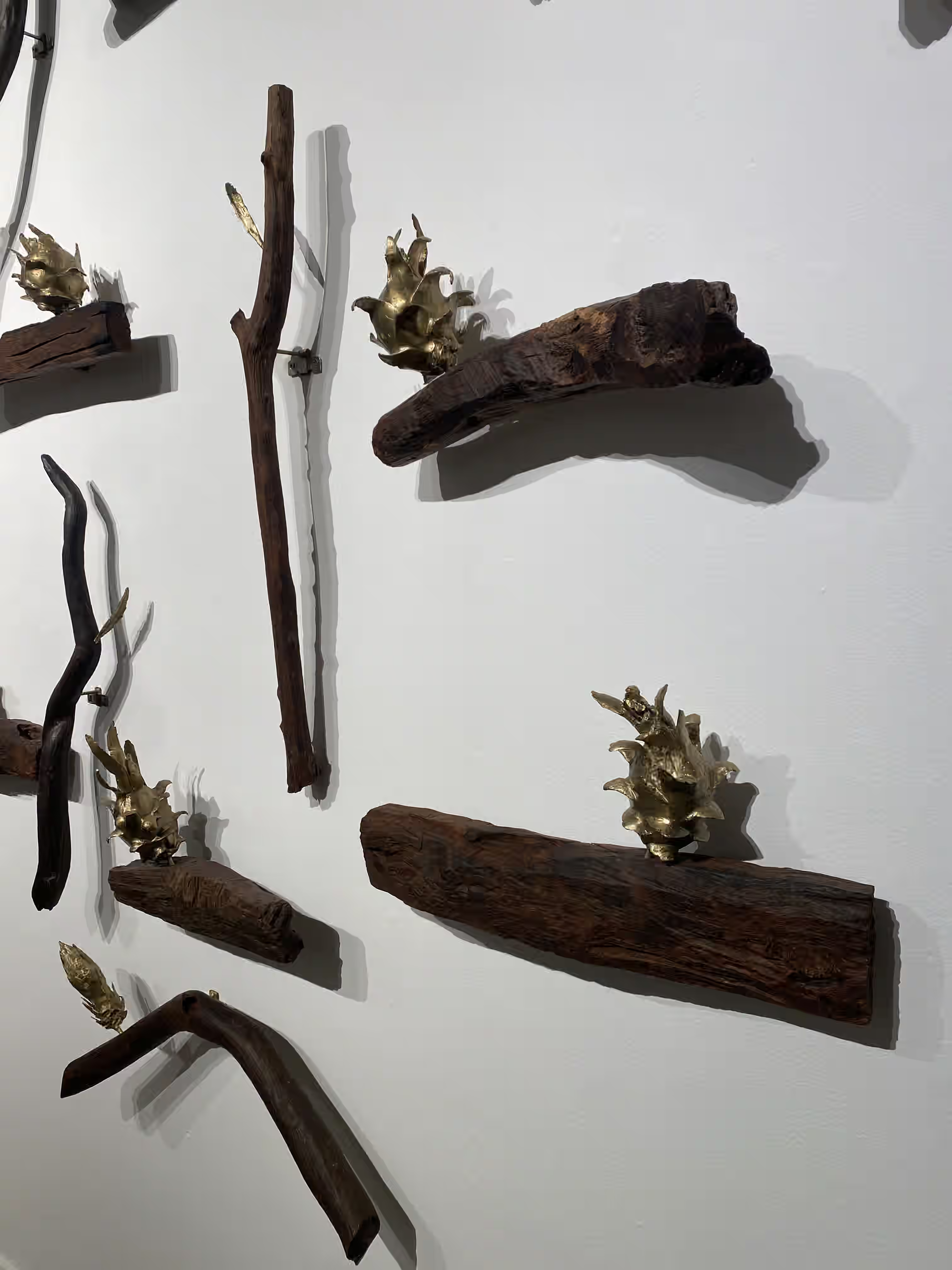
Pieces of driftwood hung on the wall are transformed into elegant sculptures of pitaya branches, whose fruits, at different stages of maturity, are made of brass.
“Dragon Farm” (2025). Dragon fruit monoculture, rapidly expanding across Cambodia, is increasingly criticized by ecologists: depleting soils and demanding constant energy-intensive upkeep, it embodies the contradictions of agriculture driven by fast economic growth over environmental balance.

Natural Materials as Artistic Medium

One of the central aims of this Phnom Penh exhibition is to reintroduce natural materials — soil, wood, stone, bark, water — not merely as subjects of contemplation, but as living artistic mediums in their own right. In doing so, Samnang extends an invitation, particularly to younger generations, to look at the natural world not as a backdrop or a resource, but as a creative partner, a co-author of meaning.

This is what we call Artistic Ecology — the practice of engaged, ecological art that breathes with its environment rather than consuming it.

An Exhibition for Our Time

In a Cambodia undergoing rapid transformation — persistent land pressure, fragile ecosystems, growing tensions between modernization and the preservation of indigenous cultures — Samnang's work resonates with rare sharpness. The Institut Français du Cambodge, already known for its ambitious programming, reaffirms its place as a key venue in Phnom Penh's cultural scene. It does not offer easy answers. It opens spaces that only contemporary art can create: spaces where we stop seeing the land as a resource and begin to perceive it as a living being to which we are accountable.


Also worth discovering in the local art scene: Nou Sary and Im Pesey, two Cambodian artists whose works speak to the country's creative vitality. For gallery visits around the city, The Gallerist remains a must.
Pieces of driftwood hung on the wall are transformed into elegant sculptures of pitaya branches, whose fruits, at different stages of maturity, are made of brass.
“Dragon Farm” (2025). Dragon fruit monoculture, rapidly expanding across Cambodia, is increasingly criticized by ecologists: depleting soils and demanding constant energy-intensive upkeep, it embodies the contradictions of agriculture driven by fast economic growth over environmental balance.